India and China have yet to resolve their long-standing boundary dispute. But in recent years they have built a carefully crafted architecture of Confidence-Building Measures (CBMs) to prevent possibilities of any adverse developments along the disputed border. What is the state of current CBMs as perceived by leading experts from India and China? How have these held up to the pressures of recent years? Where do national perceptions merge or contend? What additional measures might be needed to strengthen those CBMs that already exist?
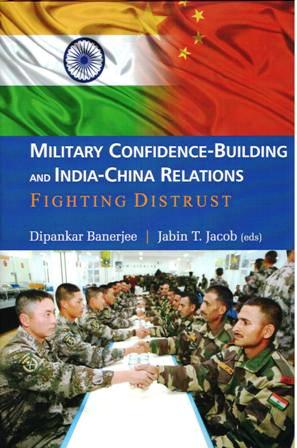
Published as co-author with Dipankar Banerjee, ‘Sino-Indian Military CBMs: Efficacy and Influences’, in Dipankar Banerjee and Jabin T. Jacob, Military Confidence-Building and India-China Relations: Fighting Distrust (New Delhi: Pentagon Press, 2013), pp. 1-11.
China has a total of 31 administrative units directly below the central government in Beijing – 22 provinces, five autonomous regions and four provincial-level cities – all of equal rank in the administrative hierarchy, if not always in political terms. In addition, Hong Kong and Macao form separate Special Administrative Regions. While Chinese provinces do not have powers that inherently belong to them by law and whatever powers they exercise are delegated from the centre, they constantly lobby the centre for resources and for greater flexibility in formulating and implementing policy. Indeed, flexibility is a hallmark of Chinese political processes and institutions.
The Constitution of China adopted in December 1982 is clear in stating that “[t]he People’s Republic of China is a unitary multi-national state built up jointly by the people of all its nationalities” but China’s history has shown that to ensure a functioning national polity, the province needed to exercise sufficient authority to institutionalize and to oversee local government. While there is a need for strong state capacity it has to exist as much at the local level as at the central level. Provinces are crucial to building up state institutional capacity at the local level. While each new regime in Chinese history tried, on assuming power, to centralize power and limit provincial autonomy, it eventually had to seek the assistance of provincial governments to maintain the credibility of the government at the centre. Centre-province relations, before the communist revolution in China and since, have thus followed a pattern of centralization and decentralization.
an advertisement for Chengdu at Beijing airport
Stronger and more autonomous provincial economies have in the reform era, led to increasingly assertive provincial governments but to assume this has come entirely at the expense of the central government is a mistake. Increased provincial assertion could also mean increased inter-provincial competition or intra-provincial competition, necessitating a strong central government that can play the role of arbitrator. Indeed, ties between the centre and the provinces have seen greater institutionalization due to structural changes introduced during the reform era but this does not imply that the central government has become more powerful vis-à-vis the provinces or vice-versa. Meanwhile, there are additional trends in China that have implications for the administrative, economic and political structure of China. These include the rise of trans-provincial economic groupings such as the Yantze River Delta and the Pearl River Delta regions as also the rise of major cities as powerful political and economic actors in their own right. Centre-province relations in China are therefore, headed towards still greater complexity.
If there is just one lesson to be drawn from the recent stand-off between China and India, it is that the two sides have a long way to go to in establishing mutual trust. While the Ladakh incident was eventually resolved by a combination of military-to-military meetings and diplomatic interactions, three aspects stand out.
One, the Chinese incursion was of a qualitatively different nature from previous such incidents. Hitherto, such ‘incursions’ meant soldiers marking their presence in their claim areas by frequent patrols, painting on rocks, littering and so on. The recent escalation and the intruders’ willingness to stay put for a considerable length of time, despite the difficulties of terrain and logistics, very likely marks the beginning of a new trend along the LAC. It also puts pressure on existing bilateral mechanisms of diplomatic and military contact and procedure. There are several formal mechanisms for inter-military and inter-government interactions, including clear stipulations laid out by treaty, about the nature of military presence in the border areas and the kind of responses that the two sides are to employ if they run into each other in disputed territory. This time, however, there was clearly a degree of unwillingness to compromise or to follow those formal mechanisms and obligations. Indeed, it is possible that this has been the case for some time now. Continue reading “The Ladakh Stand-off: What it Says (or Doesn’t) about China’s India Policy and India’s China Policy”
देश के पश्चिमी इलाके में मौजूद दपसांग में चीनी ‘घुसपैठ’ की वजह से तीन सप्ताह का गतिरोध खत्म होने के दो सप्ताह बाद चीन के प्रधानमंत्री ली खचियांग भारत की पहली आधिकारिक यात्रा पर यहां पहुंचे। पिछले दिनों की गतिविधियों पर नजर रखने वालों के सामने यह साफ हो गया है कि भारत न तो लद्दाख की घटना की वजह से अपनी जगह से उखड़़ा और न ही ली खचियांग की पहली आधिकारिक यात्रा के दिए गए संकेत से बहुत अधिक प्रभावित दिखा। भारत ने वही किया जो एक परिपक्व, आत्मविश्वास से भरी ताकत करती है।
(The English version was written on the first day of the Chinese Premier’s visit to India and updated and published originally as जबिन टी. जैकब, ‘भरोसा बढ़ाने वाली भेंट’, Dainik Jagran, 22 May 2013, p. 10 (see below).)
Chinese Premier Li Keqiang is in India on his first overseas visit since taking over his new position in March. The visit is notable for a number of reasons.
One, it came against the backdrop of the recent Chinese ‘incursion’ in the Ladakh region and the resultant stand-off that lasted three weeks. As a result, the mood could have be decidedly indifferent if not unfriendly in terms of the public reception of Li in India.
In the case of high-level visits, however, no matter what the problems and complications in a bilateral relationship, it is always important from a diplomatic point of view to make sure the atmospherics are excellent and that warmth and enthusiasm are on full display. Continue reading “Li Keqiang’s India Visit: Towards Realistic Expectations”
Originally published as जबिन टी. जैकब, “चीनी घुसपैठ के सबक,” दैनिक जागरण (Dainik Jagran, New Delhi), 29 April 2013, p. 6.
Original English text follows the Hindi text.
पश्चिम क्षेत्र के देपसांग पठार में विवादित चीन-भारत सीमा पर चीनी सैनिकों की घुसपैठ से कुछ गंभीर सवाल उठते हैं। दोनों देशों के बीच विवादित क्षेत्र के बारे में भारतीय व चीनी नीतियां क्या कहती हैं, यह जानना जरूरी है। भारत और चीन के बीच नियंत्रण रेखा की वास्तविक स्थिति बड़ी उलझी हुई है। इस क्षेत्र में चीनी और भारतीय सेना साझा नियंत्रण रेखा पर सहमत नहीं हैं और न ही उन्होंने नक्शों का आदान-प्रदान किया है। इस अस्पष्ट स्थिति में ‘घुसपैठ’ तो होगी ही। इस प्रकार की घुसपैठ आम तौर पर होती रहती है और यह केवल चीन की ओर से ही नहीं, भारत की ओर से भी होती है। कुछ साल पहले तत्कालीन सैन्य प्रमुख जनरल दीपक कपूर ने इस प्रकार की घुसपैठ की स्वीकारोक्ति भी की थी। चीनी अधिकारियों के इस बयान को इसी आलोक में देखा जाना चाहिए कि उन्होंने भारतीय क्षेत्र में घुसपैठ नहीं की है। जहां तक चीनी पक्ष का संबंध है वे यही मानते हैं कि वे चीनी भूभाग पर हैं। Continue reading “The Ladakh ‘Incursion’: Chinese Actions and Indian Lessons”
The first annual session of the 12th National People’s Congress (NPC) in China has just ended with the ‘election’ of Xi Jinping and Li Keqiang as President and Premier respectively and approval of a new cabinet of ministers. Despite the NPC’s largely rubber-stamp role – candidates approved by Congress were pre-selected by the Chinese Communist Party – the first sitting of the NPC was important because among other things, it also announced the line-up of China’s new foreign policy team.
It is important to note that major foreign and security policy initiatives are the preserve not of the Chinese Ministry of Foreign Affairs (MFA) as part of the Chinese government but of the Communist Party. Continue reading “China’s New Foreign Policy Team”
The Chinese National People’s Congress (NPC) and the Chinese People’s Political Consultative Conference (CPPCC) together form the equivalent of China’s national parliament broadly representing a lower house and upper house respectively. The 12th NPC will ‘elect’ China’s new President and the Premier – Xi Jinping and Li Keqiang respectively – who were in fact decided by the 18th Communist Party (CPC) Congress in November last year. It is also the 18th CPC Central Committee that has approved the candidates for China’s new cabinet of ministers (or the State Council) and the heads of China’s equivalent of the Supreme Court and of its investigative and prosecution agencies.
While the Party continues to be the more powerful than the government in China, the symbols of state such as the NPC are increasingly vocal. This 12th NPC will see discussion over a variety of topics that will keep China’s new leaders engaged over the next decade. Continue reading “China’s ‘Parliament’: Clear and Present Challenges”
This is an updated version of a presentation made at Session II: Strengthening Multi-modal Connectivity, 11th BCIM (Bangladesh, China, India and Myanmar) Regional Cooperation Forum, Dhaka, Bangladesh, 24 February 2013.
The objective of this presentation is to draw some lessons for the implementation of physical connectivity infrastructure projects in underdeveloped areas within the BCIM sub-region using experiences from some ongoing infrastructure projects in the region.
1. Objectives of Connectivity
At the outset it is important to define what physical connectivity will achieve. ‘Economic development’ is an objective, certainly but the expression can mean different things to different constituents. Ordinarily, better roads and improved telecom connectivity lead to increases in the volume of trade, the movement of labour and so on. However, in the absence of a rational policy on and/or management of border trade for example, better roads will only increase the volume of illegal/informal trade. This does not help the authorities in increasing revenues in the form of tax collections and therefore, in getting adequate returns on investments made in developing physical infrastructure. Continue reading “Issues and Considerations in Connectivity Projects in the BCIM Region”


 Thinking about China in India